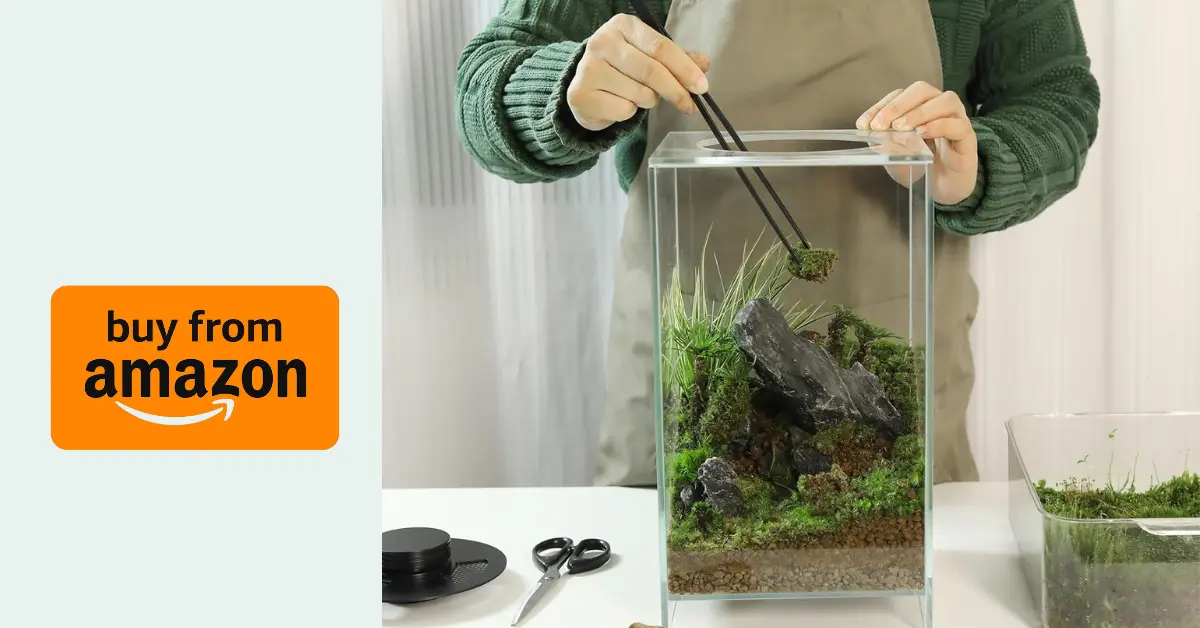
A desktop glass terrarium with a grow light combines a display vessel and artificial lighting, but suitability depends on actual light output, ventilation, and the plants inside. Claims about weeks of personal testing are not a substitute for verifiable specifications.
Thank you for reading this post, don’t forget to subscribe!
Independent background reading: See RHS terrarium growing guidance for general care and enclosure considerations. This is background guidance, not verification of this product’s specifications or evidence of hands-on testing.
Who should consider this product?
Indoor gardeners who need a compact display and are prepared to verify lighting and moisture requirements.
What to check before buying
- What is the vessel’s usable planting space?
- Is the LED intensity specified at a useful distance?
- Is there a timer or safe way to control photoperiod?
- Can the container be opened for cleaning and pruning?
- Is the power connection protected from water exposure?
Important limitations
Do not use a small decorative terrarium as a fish habitat unless it meets the animal’s full space, filtration, heating, and welfare requirements. Plant enclosures and aquariums are not interchangeable.
Light quality depends on intensity, duration, distance, and plant needs. A timer may improve consistency, but it cannot compensate for an unsuitable lamp or growing environment.
Practical setup and evaluation checklist
- Check dimensions and electrical safety instructions.
- Choose compatible plants, prioritizing species-specific light and moisture needs.
- Set up a suitable substrate without overwatering.
- Monitor temperature near the lamp and glass.
- Adjust lighting based on plant growth rather than marketing promises.
How to judge value
Compare the current product listing, dimensions, included accessories, replacement-part availability, delivery and return policies, and the cost of any equipment not included. A lower upfront price is not good value if essential materials must be purchased separately or if the product cannot meet the intended use.
Common mistakes
- Buying from a headline claim without checking the full specifications.
- Assuming all plants or animals described in a category have identical care needs.
- Ignoring maintenance access, cleaning, and long-term durability.
- Treating customer reviews as proof of technical or biological suitability.
Frequently asked questions
Is this the best choice for every beginner?
No. Suitability depends on the intended project, available space, the living organisms involved, and the verified product specifications.
Should I trust the included accessories?
Check every component individually. A bundle can be convenient, but not every included item will be suitable for your intended use.
What should I verify before ordering?
Check current dimensions, materials, included contents, warranty or return terms, and whether the setup can meet your specific care requirements.
Further reading
For plant-focused projects, see our terrarium starter kit guide and glass container buying guide. Always prioritize species-specific husbandry resources for live animals.
Editorial transparency: This article offers an evidence-conscious evaluation checklist. It does not claim firsthand testing or independently verified manufacturer specifications.
Related Terrarium Master guide
For practical lighting specifications to verify before buying, see our grow-light guide. Choosing the Right Lighting for Mini Terrariums.
Lighting specifications that matter
Power consumption in watts is not the same as usable light at the leaves. Where possible, look for PPFD at a stated distance, lamp-to-canopy clearance, dimming controls and a timer. Without measured output, suitability for high-light plants cannot be confirmed. Even a capable lamp can be ineffective when placed too far above the foliage.
Plan the desktop location
Choose a stable surface away from direct afternoon sun, heater vents and locations where water can reach electrical outlets. Measure the full height with the lid and light installed, not just the glass body. Allow enough space to remove the lid and prune plants. Check whether the lid traps heat or condensation around electrical components.
What to monitor after setup
| Observation | Possible issue | Next check |
|---|---|---|
| Leaves stretching | Insufficient usable light | Distance and plant-specific lighting needs |
| Brown dry patches | Heat or light stress | Temperature and placement |
| Continuous heavy fogging | Excess moisture or low ventilation | Substrate and condensation |
| Standing water at base | Undrained watering | Root-zone moisture |
Who should choose a separate lamp?
If the built-in light cannot be adjusted or its output is undocumented, a suitable separate grow light over a conventional plant container may provide more control. A decorative enclosure is most valuable when it also supports the chosen plant’s maintenance needs.