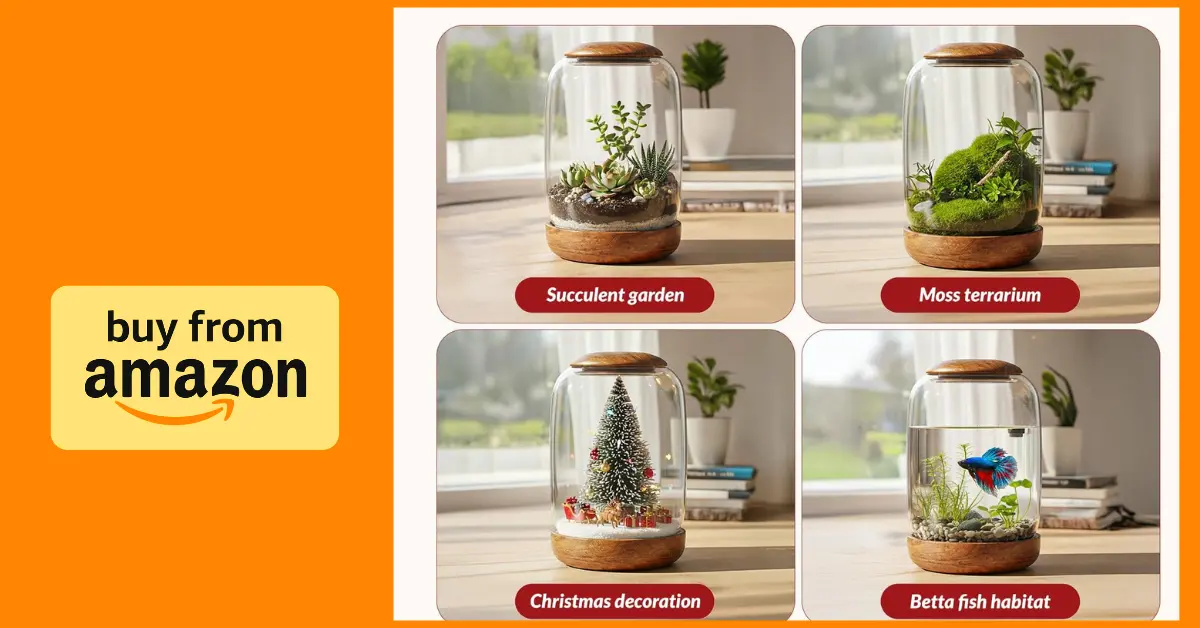
The NoctisCorvus Exclusive Glass Terrarium is marketed as a decorative glass vessel with a natural wood lid and base. Its appeal is straightforward: a compact, visible planting display for a desk or shelf. Whether it is a good choice depends less on its appearance than on the plants you intend to keep and how you will manage moisture around the wood.
Thank you for reading this post, don’t forget to subscribe!
Who should consider this style?
It is most relevant to people planning a small woodland-style display with humidity-tolerant plants or moss. A compact vessel can be attractive, but it leaves limited room for growth and maintenance. Before buying, confirm the current product dimensions, included components, and return policy with the seller; listings can change.
What to inspect before buying
- Opening width: Can you insert tools and remove old leaves without damaging the plants?
- Lid fit: Is it designed to hold humidity, and can you open it easily for inspection?
- Wood finish: Is the base protected against incidental moisture, and does the manufacturer provide care instructions?
- Glass quality: Check for stable construction, safe edges, and adequate clearance above plants.
- Included items: Do not assume plants, soil, or tools are included unless explicitly stated.
Wood lids and moisture
Wood is a natural material that may react to persistent moisture. Keep the exterior base dry, wipe spills promptly, and follow the manufacturer’s care instructions. Do not assume that a wooden lid guarantees sufficient ventilation or that applying oil is appropriate for every finish. If mold or deterioration develops, inspect moisture conditions and the affected material rather than applying an unverified treatment.
Plant compatibility
Small mosses and suitable tropical foliage plants may work in a covered display when their individual light and moisture requirements align. Most common succulents and cacti are poorly suited to consistently humid, enclosed conditions. Check mature plant size before choosing a compact vessel.
Setup and care
- Inspect the glass, wood components, and lid for damage.
- Clean the vessel and let exterior components dry.
- Choose compatible plants and an appropriate growing medium.
- Plant sparsely so you can reach the glass and remove debris.
- Add water cautiously; a glass vessel without drainage retains excess water.
- Place it in suitable indirect light and away from intense direct sun.
- Monitor condensation, pooled water, and plant growth during the first weeks.
Advantages and limitations
The main potential advantages are decorative presentation and a compact footprint. The main limitations are restricted planting space, possible moisture exposure to wood, and the need to manage water in a vessel without a drainage outlet. These are design considerations, not observations from independent hands-on testing.
Frequently asked questions
Does a wood lid make the terrarium self-sustaining?
No. A lid may reduce moisture loss, but plants still need suitable light and periodic inspection.
Can I keep succulents in it?
A covered humid setup is generally not a good match for most commonly grown succulents.
Does it need a drainage layer?
Stones can be decorative, but they do not create a drainage outlet. Water carefully and monitor the growing medium.
Related reading
Compare container styles in our glass jar guide, and see our moss terrarium kit guide for plant and moisture considerations.
Review transparency: This is an editorial assessment of the product’s stated design and suitability. We have not independently tested this specific NoctisCorvus unit, verified current pricing, or measured its performance.
Related Terrarium Master guide
For planting and moisture considerations in small glass containers, see our bottle terrarium guide. Mini Terrarium in a Bottle.
Wood lid versus glass lid: practical trade-offs
| Consideration | Wood lid | Glass lid |
|---|---|---|
| Moisture | May absorb condensation; finish and sealing matter | Does not absorb moisture but can drip condensation |
| Cleaning | Follow material-specific care; avoid soaking | Usually easier to wipe with plain water |
| Plant access | Depends on opening and fit | Depends on opening and fit |
| Appearance | Warm natural finish | Uninterrupted view |
How to plan a planting before ordering
Start with the actual interior diameter and height, not the external dimensions. Reserve space for a thin planting substrate, plant roots, leaf expansion and access for tweezers. For a small covered vessel, choose compact humidity-tolerant foliage rather than a succulent or a vigorous vine. Confirm whether the lid is designed for sustained humidity; decorative wood is not automatically waterproof.
First-month monitoring
After planting, place the display in bright indirect light away from hot direct sun. Check whether the glass remains heavily fogged all day or whether water pools at the base. Remove decaying leaves promptly. Inspect the underside of the wooden lid for discoloration, warping or persistent dampness. If those develop, reassess moisture and the suitability of the lid rather than applying household cleaners near the plants.
When to choose a different container
Choose a wide-mouth jar if pruning access is your priority. Choose a conventional draining pot for plants that need frequent drying cycles. If the seller cannot clarify the lid finish, replacement availability or actual opening size, a simpler container may be the lower-risk purchase.