If you’ve killed every houseplant you’ve owned, this book knows why — which is why actually, let me put that more precisely — it explains the root cause (which is a critical factor) in a way that clicks. Lucy Howard’s paperback, released February 6, 2026.
Thank you for reading this post, don't forget to subscribe!
Hard to ignore those numbers. Maps out the entire closed-system water cycle so you grasp why overwatering drowns roots.
The final result: for tech-minded beginners who love systems and hate guesswork, this guide is (at least in loads of practical scenarios) a smart $15-20 investment.
Key Point
- The false bottom method — gravel plus mesh — prevents swampy soil; without it, your jar becomes a moldy mess.
- Over 30 plant profiles spell out exact light and moisture needs, so you don’t have to google each species.
- The troubleshooting charts saved my sanity when white mold appeared 3 days in.
- Springtails and isopods are the unsung heroes (more on that later).
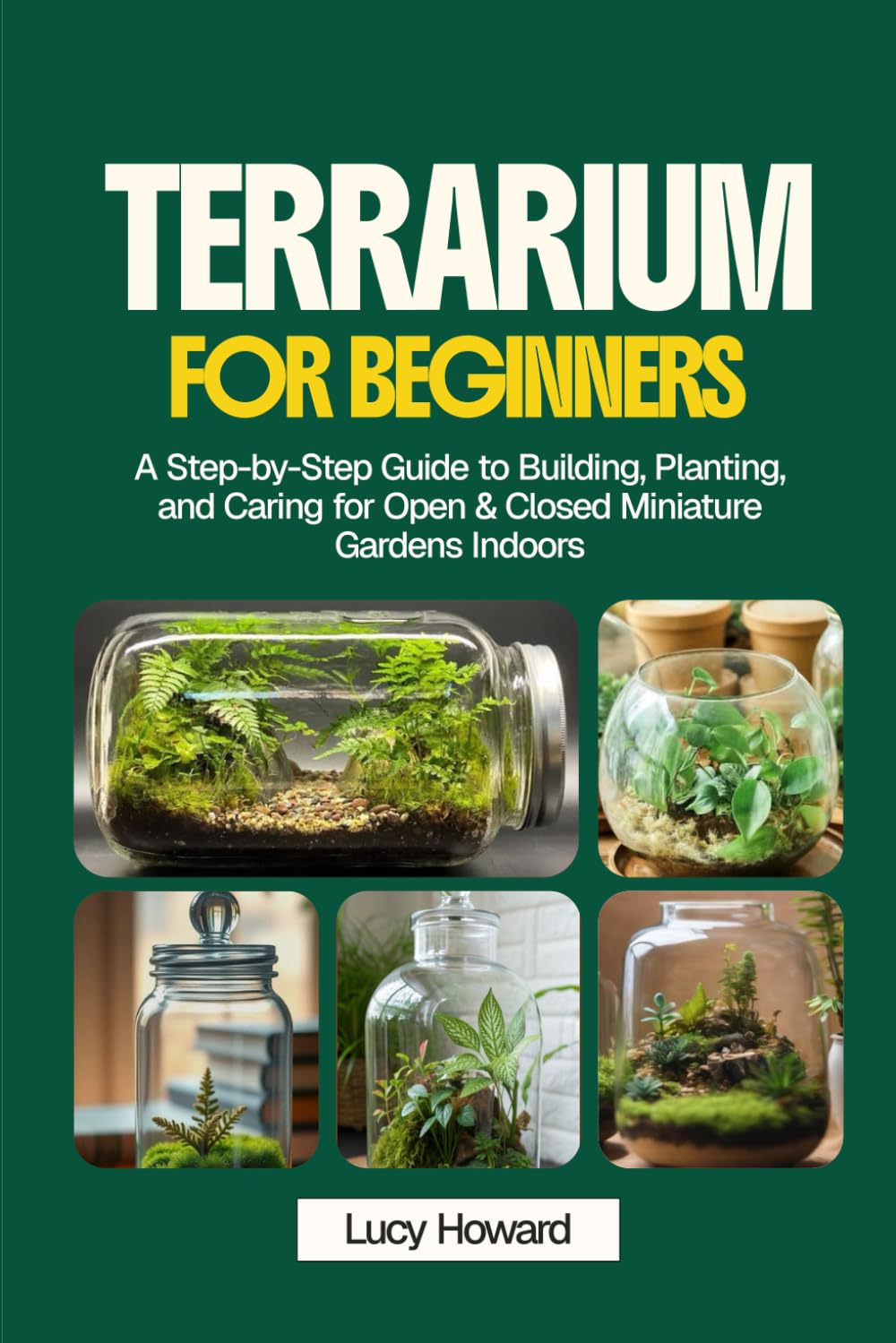
Terrarium for Beginners: A Step-by-Step Guide to Building, Planting, and Caring for Open & Closed Miniature Gardens Indoors: Howard, Lucy: 9798247253457: Amazon.com: Books
Terrarium for Beginners: A Step-by-Step Guide to Building, Planting, and Caring for Open & Closed Miniature Gardens Indoors [Howard, Lucy] on Amazon.com. *FREE* shipping on qualifying offers. Terrarium for Beginners: A S
Quick Specs at a Glance
- Release: February 2026
- Format: Paperback (doesn’t always lay flat — I used a paperback clip)
- Skill level: Absolute beginner to intermediate
- Focus: Both open succulent gardens and closed tropical jars
- Unique angle: Treats the terrarium like a miniature machine you tune
- Page count: Not listed, but dense enough for a weekend read
- Extras: Visual substrate layering guides and troubleshooting charts
Pros & Cons
Pros:
- Step-by-step layers built for logical thinkers. I read the drainage chapter twice — it’s that clear.
- Low-maintenance “set it and forget it” approach that actually works.
- Sharp distinction between arid open containers and humid closed jars.
- Photo-heavy guides for substrate stacking.
Cons:
- Zero smart sensor or IoT integration info. Tech enthusiasts may want more.
- No deep dive on high-end grow light spectrums for dark rooms.
- Paperback binding resists staying open during hands-on building.
Real-World Performance
My first try: a sealed jar with fittonia and a nerve plant. Day 5, condensation blinded the glass. I cracked the lid for 4 hours, per the book’s exact timing, and the fog cleared. That kind of precise.
Number-backed advice is rare in beginner guides.
The bioactive section changed everything. I added springtails, those tiny white insects.
And within a week the musty smell vanished. The book explains they eat decaying matter. Functioning like a cleanup crew.
I rarely ever would’ve guessed that on my own.
Who Should Buy It?
If you want a slice of nature on your desk with minimal daily effort. This is your book. From a practical standpoint, tech ensoiasts who love tuning systems will geek out on balancing humidity and light. Anyone who’s failed with houseplants.
But thrives on logical structures — you’ll finally get it.
Who Should Skip It?
Gardeners craving hydroponic automation or IoT sensor integration will feel underwhelmed. If you already preserves multiple bioactive vivariums. The beginner focus might feel too basic.
Final Verdict
For all intents and purposes. 5 out of 5 for its niche. It transforms a fuzzy art into a clear, repeatable process. The lack of smart-tech integration holds it back from perfection, but for under $20. From a practical standpoint, you’re getting a troubleshooting companion that pays for itself in saved plants.
Check the current Amazon price before it goes on backorder.
Where to Buy: Buy from Amazon
- Order the book — get the paperback and a simple glass jar with a lid.
- Build the false bottom — add gravel then a mesh barrier exactly as the guide shows.
- Add activated carbon — sprinkle a thin layer to filter the tiny ecosystem’s air.
- Plant and mist — insert fittonia or peperomia, then lightly mist before sealing.
- Observe and adjust — if heavy fog appears, open the lid for 2-4 hours per the troubleshooting chart.
FAQs
How long does a closed terrarium last without opening?
Properly balanced jars can stay sealed for months or even years. The book’s water cycle diagram suggests how condensation returns to the soil. But you’ll occasionally crack the lid to trim if (a detail often overlooked) growth gets too lush.
Do I really need the drainage layer?
Yes. Without gravel and mesh separating soil from standing water.
Roots sit in a soggy mess and rot. An unexpected detail.
The guide dedicates an entire chapter to why this matters.
Are springtails dangerous or harmful to my home?
When you look closely, no, springtails stay confined to the humid jar environment. They eat mold and decaying matter, leaving plants alone, and i introduced a culture and never saw (though exceptions exist, naturally) them outside the container.